Twitter Feed

Follow cchsreads on Twitter

Total Pageviews

Showing posts with label 2. Show all posts

Thursday, July 31, 2014

The Ring and the Crown

Written by: Melissa de la Cruz

This novel seems to me similar to a weak cup of unsweetened tea.

The Ring and the Crown follows the lives of several girls in the age of ball gowns and the London season. All have different tales of love and loss, but they all end up entwined in some small way. Each is a prisoner of duty, and each wishes to be rid of the bonds of responsibility to their families.

There are several different characters in this book, and I think the teaser on Amazon gives a good summary, so I won't try to imitate it. The link to the teaser is here.

De La Cruz's intended message of the book was clearly to show how strong women are, especially in the past when they were expected to do what is right by their families at all times. Women were married off for strategic or monetary reasons, and they were seen always as the weaker sex. Their misfortunes and bleak futures were demonstrated well in the novel. Unfortunately, the actual main characters, the women, did not live up to De La Cruz's intended message.

I did not particularly like this book, in fact I found it a bit boring. The stories of the women were not particularly riveting, and the secondary characters were mostly flat and one-sided. The women themselves did not seem strong to me. They seemed in some cases weak, but mostly just silly. I did not think that they acted with very much self respect on the whole, and that instead of emphasizing their right to freedom, they acted rashly and with petulance. They did not strike me as level-headed, diplomatic strategists, instead I was under the impression that they needed to grow up.

The women weren't all off the mark however, in fact there was one character that I did like. The Princess Marie-Victoria was the strongest woman in the book, and she did show a level of diplomacy and resilience in the face of injustice. She was certainly a redeeming character in an otherwise weak crowd of simpering females.

I suppose in the end, De La Cruz did make the point that women have to make many sacrifices and bear many hardships. I understood this well from the book, but it did not ultimately impress me. The women were largely shallow and concerned only with their appearance (except for the Princess). It is never enjoyable to read a book where most of the characters live up to their bad stereotypes.

If you really, really, enjoy princess-y type books, then go ahead and read the book. It is not a bad novel,  I just did not find it particularly impressive.

I do really like the cover art.

2/5 stars. 

Thursday, June 12, 2014

Chorus

By Emma Trevayne


This is the sequel to Coda, an intriguing futuristic story about a society that is controlled by addictive music until a boy named Anthem creates his own music and leads a revolution.  Chorus is the story of his younger sister, Alpha, who has moved to Los Angeles and is working hard in school so she can discover a cure to strange and powerful flashbacks that have been haunting her and her twin brother, Omega. There was a lot that bothered me about this book.  There was one of the most pointless deaths I have read (which I won’t expound on to avoid spoilers) as well as a character just being able to guess a super important password, which is something that always bothers me in books.  When setting a password on a top-security system, it’s not going to be something that someone can just guess. However, what bothered me most of all was that the author hid relevant information that the main character knew.  For the first few chapters of the book, Alpha is worried.  But does she say what she’s worried about?  No.  The worry is a primary driving force to Alpha’s character, and the reader is kept in the dark.  The back cover states that “it takes only one call to bring Alpha back to the brother that raised her ... and to the Web.”  And the call comes at the end of the third chapter.  So this is when the reader is finally told what’s bothering Alpha, right?  Wrong.  She and her friends are set into a frenzy, immediately packing up to go back to the Web.  They were clearly all prepared for this and they all know exactly what’s going on, but the reader doesn’t.  It isn’t until almost forty pages in that it’s finally revealed that Anthem is dying.  There were hints - a snippet of dialogue, for instance, but the connection between the call and Anthem’s illness are thin and I only found them when I went back to reread the beginning and was looking for them.  All it would take is one explicit thought of Alpha’s to flesh out her worry and save the reader a lot of confusion.  Maybe this was mentioned at the end of Coda, but I read that a long time ago (when it came out as a galley), and again, all it would have taken is a simple thought and everything would be clear. Because of things like this, the story was difficult to follow at times.  There was a lot of inferring left to the reader, which can be good at sometimes, but it happened way too much in this story.  It made me think in the wrong way - not a thought-provoking thinking, but more of trying to piece the plot together thinking.  The author took the “show don’t tell” a little too far.  It’s one thing to wonder about motivations, secrets, or plot twists, but another thing to wonder about what happened five pages ago.
This book is a 2.  There was nothing especially special about this book and there were too many things that bothered me peppered throughout.  There were some old characters and some new ones.  There were some cheap plot devices, but there were also a few interesting concepts, though nothing that wasn’t done better in Coda.  If Chorus were a food, it would be overly-processed chicken.  The chicken is dependent on packaging to sell itself, and you’re not really sure what you’re eating as you chew.

Monday, February 3, 2014

Landry Park

By Bethany Hagen. Release date: February 4th 2014 (tomorrow!)
       Madeline Landry lives in the luxury of the antique Landry estate with her mother and father. They are among the few elite living in a post-war Jane Austen-romance-novel-styled society. Their opulent lifestyles are supported by a large common lower class. Below the lower class are the Rootless, the poorest of the poor stuck with the worst jobs: handling spent radioactive charges used for generating electricity. There's a lot of responsibility on Madeline's shoulders to step up to the role of the next of her line, the most powerful family in the United States. As Madeline receives more pressure from her father to follow family responsibility, she learns more about the Rootless than she ever knew before.

       The upper class in this book is literally modeled after a Jane Austen novel. Inexplicably, in post-war society, they reverted to the 1700's. They drink tea, go to parties, have balls, engage in courtship, and act like proper ladies and gentlemen. They even ride horse-drawn sleighs in winter. While this adds some flavor to the book, it does not work out very well. The gender imbalance is constantly at odds with the gender-equal society described in the prologue. Furthermore, there is not enough world-building to describe why they are stuck in the 1700's or explain the complicated economics of the country. While town-sized economics are explained, there is not enough description of state-wide or country-wide economics, leaving me wondering how there is a working feudalistic economy.

     Overall I am disappointed with Madeline's actions and just annoyed with her love issues (which are a main part of the book).  Perhaps what bothers me the most is that Madeline is a weak character. She is constantly torn between duty and what she desires, crushed under her father's controlling grip. At every turn others get the best of her, forcing her into things she doesn't want. She actually never does anything dramatic for the cause of good in her own volition, except when she must act to save a life. Even then, she nearly buckles under the shame of acting out of turn. She remains attached to her desires and fears, not really growing as a person. The end of the book precipitates a series of events (mostly without her help) that conveniently end most of her problems for her and solves her romantic love triangle for the better. Too perfect. That Madeline could make no progress in any of her tasks by herself frustrated me; that she was controlled; that she was ineffective; that she let opportunities slide; that half the plot was her pining after a forbidden love: Ugh.

      Is this book a Jane Austen romance or a futuristic sci-fi dystopian? It's both, but it shouldn't be. While this book is modeled to be sci-fi, it's more of a romance with a sci-fi background.There were chances to comment on societal issues that were missed. The sci-fi side lacked world-building and attention. The Jane Austen part clashes with the rest of the book. With all this, I think even the best writers would have difficulty. Overall I kinda enjoyed reading it, but all the issues annoyed me the whole way through. I rate this book a 2. You may end up liking the story, but there are better romances and better futuristic distopias out there.

Thursday, January 2, 2014

The Strange and Beautiful Sorrows of Ava Lavender

Written by: Leslye Walton
The Strange and Beautiful Sorrows of Ava Lavender: Best taken with an almond pastry and a steaming cup of nostalgia.

This is the story of love, the ups and downs, the misunderstandings, devotion, sweetness, and of course, sorrow of falling in (and out) of love. The stories of four generations of Lavenders are told in a sincere and poignant style, all narrated by the youngest of the clan, Ava. The book divulges the most secrets passions and regrets of each of the women, in such an easy manner that you are left wondering how you came to be so familiar with the characters in such a short time. Walton ties in whimsy and bleak desperation that creates an air of sorrowful beauty. By the middle of the book, I felt as if I had known these women personally for a number of years. I was invited to cry, laugh, and stare in awe in the magical domesticity of their lives. Up until about halfway through, I was completely roped in.

Oddly, Ava Lavender, the main character, seemed the most inaccessible, even typical character. Despite her physical differences, she was normal enough, and I didn't feel much pity for her. Her personal story was mildly interesting in the beginning, but didn't seem to be a coherent part of the book. She is an abnormal teenager whose only hope is to be normal. Fairly typical plot, but it was not completely off putting, as Walton upheld her lyrical style of writing that was so enticing. But then the climax of the book took a bizarre turn -- the only word I can describe it as is grotesque. That may have been Walton’s goal, but it was so out of sync with the rest of the story that I was left feeling like, “well, that escalated quickly…”. It really was a depressing and creepy twist. To be honest, I didn't understand the point, and the next twenty pages until the end certainly didn't help to clear anything up. The ending lacked a sense of closure. This is unfortunate, because I truly loved the the elder Ms. Lavender’s, and I believe the book is worth reading, if only for the first half. In short, the second was a little horrifying, and not in a chilling-but-entertaining-horror-story kind of way. It was just too weird and bad. This was too bad, because the other characters are vivid, full of life, and extremely readable.

2/5 stars

Monday, November 11, 2013

To Be Perfectly Honest


By: Sonya Sones

After the first 100 pages I was super excited to continue with this book.  It was amazing how well the narrator, Colette, would tell a story and then tell you at which point she started lying.  Starting from where she started lying she would continue to tell you her story until she once again told you at which point she was lying.  She continued on like this for the first 100 pages.  These 100 pages were great.  Colette and I could have been talking to me.  This is a novel in verse but was more like a conversation for the first 100 pages.  The next 350 pages or so were not as good.  Colette falls in love with Connor...la la la... things go wrong, what a SURPRISE!!!! How else would the book progress? Basically nothing happened in this book. Colette was in love with Connor and stuff happened between them.  Just like in any other romance.  There is an extremely predictable twist, so maybe just a bend.  The only good thing in this book was Colette's little brother, Will.  Will has a lisp.  My favorite quote of his is "Being a great actor / ith of paramount importanthe when you're / pulling off a thcam of thith magnitude."  He is always saying things that brighten the mood of the book.  Colette, on the other hand, is quite the downer.  A quote to describe her would be "I throw myself / onto my bed / and cry-- / I cry until my eyes are swollen shut."  Interesting right? By this point in the book I really didn't care that she was crying.  I also didn't think this book was that well written.  The only time I thought the format (novel in verse) was used well was "I owe that kid / a truckload / of gummy worms!"  I thought that this captured the way she lied.  She would be saying something but then sort of twist it to mean something else

I would give this book a 2.  One and a half for Will and a half for the predictable yet solid ending.  I would say this book was like a stale cupcake.  Old, overused, and not very good.  But, to be perfectly honest, you can't go completely wrong with sugar, right?

Thursday, August 29, 2013

Mortal Fire

by Elizabeth Knox

Canny is 16 years old and lives in a world "very like our own" in 1959.  She is a mathematical genius, remembers pretty much everything, and has the unique ability to see "Extra," which she later discovers is part of an intricate magic system that only some can use,
mainly the Zarenes.  The Zarenes are a family that live in Zarene Valley, and Canny stumbles upon them while traveling with her older brother, Sholto, and his girlfriend, Susan, on a research project of the 1929 coal mine explosion that happened near the valley.  The only Zarenes that live in the valley are between five and thirteen, plus Iris, Cyrus, Lealand, and Ghislain.  Canny spends a lot of time wandering around, lying to her brother, and discovering the secrets of the valley and her past.  After quite a lot of this, the end happens.  And it's not because she figures anything out.  It just happens.  Canny comes up with various ways to do what she wants, most of which involve telling her brother somewhat unnecessary lies.  A little deception might be necessary, but the amount of lies she tells is far outweighs this necessity.  Despite being presented as someone who acts and thinks based purely on logic, Canny constantly reacts illogically.  Her interactions with Cyrus made little sense, and I gave up trying to follow her thought processes halfway through the book.  Furthermore, the conversations in the book do not feel like real conversations.  They are exchanges of words between the characters so that they can have interactions. While reading this book, I felt like I did when I read Shakespeare for the very first time.  As you read, you get the general gist of what's going on, usually, but you miss a lot of the individual actions and happenings that make the story feel real.  The author often implied action rather than described them.  Sholto and Susan felt like shells of characters rather than characters with depth.  They acted as Canny or the plot required, and I got little sense of personality from them because it changed so much.  The book also mentioned that Canny and Susan dislike each other, but it was almost impossible to tell this from their actions.  It says they complain about each other a lot, but it only ever tells you that they complain, and it does not show them complaining about each other.
What made the entire book even more disappointing was that it could have been beautiful.  There were some nice parts that could have been wonderful if the book had been written better, but lack of emotional consistency ruined them.  The end would have been so much more poignant if it had been set up.
Overall, the book is a 2.  It is your least favorite flavor of meringue.  The magic and histories were interesting, but the book was a chore to read.  After biting into a meringue, it dissolves away in your mouth.  After reading passages of the book, you have to let them dissolve within your head and just keep on reading.  It is not an action-packed book, it is a wandering book.  There is lots of air and less substance than I would like.

Friday, April 19, 2013

Second Impact

This galley, set to be released in August 2013, is by brother and sister David and Perri Klass.

        I was told that two other people (who happen to be athletes) wanted to take out this book before I nabbed it. We were all drawn to it for the same reason: concussions. I myself had a concussion that lasted for months a couple years ago, so this book immediately interested me.
The title is coined after Second Impact Syndrome (SIS) which is where the brain swells after receiving a second trauma when it is still recovering from a previous trauma. It can quickly lead to death, especially without emergency treatment. A frustrating part is that the only emphasis on SIS concerning the plot in the book is literally at the fifteenth-to-last-page. I counted. You have to read 264 pages before you breach the issue as proposed by the title. Grrr.
        This book is told through the perspective of two bloggers, Jerry (high school football megastar) and Carla (a high school  journalist). Together, they alternatively relate key events revolving around Jerry's high school football experience in a typical town in New Jersey. While Carla does have her little side-story about an ACL tear a year back, she doesn't seem contribute anything else to the book except providing convenient ways to add more information about sports injuries. She's not much of a do-er in the book. Essentially, she is the cheerleader. Jerry is the real point of this story. He's the do-er. Carla is the try-er, who tired to do something and ultimately was completely shut down. I don't want to spoil it, so I won't say much. Carla had great points and was a protagonist of the story with a motive and I was disappointed that her cause lead to nowhere and was punished while Jerry, the football star, ultimately had no real issues and was successful overall.
        In the book, the whole universe is centered around Jerry and football. The imaginary town it's set in, Kendall, is of those places that are crazily obsessed with male-dominated high school sports. I didn't like that. One, because I don't like football all that much or the kinds of people associated with it, and two, because in my life such all-encompassing obsession is beyond unrealistic. It boggled my mind, really. Concord is like other small New England towns; you go to the game if you're the parent, sibling, personal friend of a football player, or if you're playing in the band. In this book if you could breathe, walk, and talk you went to every game to scream yourself hoarse. If you couldn't go, you watched it on TV.
        Jelle suggested that this book is geared towards a more football-focused demographic and I was just the wrong person to pick up this book. I agree, I  can imagine that some places among the states can take their football teams very seriously (but I think it's a flaw that not everyone can relate to or at least come to understand a situation in a book; limited audience normally doesn't come to great success). Later, I happened to notice through some research that the Klasses used to live in New Jersey. Coincidence? Maybe. I don't think so. My hunch was confirmed when I found that their hometown of Leonia shares the same team name as the protagonists in the book: the Tigers. It looks like the Klasses were sentimental to their hometown, like many authors are. I decided to find out if there was really something strange going on in New Jersey. As it turns out, it looks pretty normal from my standpoint.
        In a video clip of the Tigers of Leonia football game for the semifinal state championship in 2012, there was a smattering of 50 people in the visitor's stands. This does not correlate at all with the 5,000+ fans that show up for every game in the book. I don't know what setting the Klasses were trying to base the book on, but it's based on nowhere around here. I will continue to think the setting presented in the book is absolutely bonkers until I stand corrected.

That was a pretty long-winded nit picking of just a few problems in the book. I don't want to drag on for too long, so here are my main points about this book in a shorter form.

CONS
The book was written like a web blog; each new post carries on the story, but I saw quite a few problems:
1- Carla and Jerry are too public for it, with awkwardly personal details. You just wouldn't go that far.
2- Their avatars are pictures of models, like you'd see in chic lit. I did not appreciate this. This is not bad chic lit (or at least it shouldn't be). I recognize that cover art and other things like it are not controllable by the authors, but it is certainly controllable by the readers. I am a reader, and I did not like those pictures. Publishers and agents, you better change that (pictures of scenery, abstract shapes, logos, or no avatars at all is acceptable).
3- They are amazingly precise in their blog posts for events that they are recounting from memory.
4- I think writing this book in the typical omnipresent or point-of-view format would have been better than the web blog format. Then we can see personal feelings as they are thinking about what is happening, have a better connection with the characters, and the issue of high detail would have been fixed.
5- There were some 'posted comments' at the end of some of the 'blog posts' to keep the book inside the blog format idea. They were HORRENDOUSLY cheesy. UGH. Just sooooo fake. And whenever a comment was 'deleted' by a moderator, that was even worse.

More issues! Yay!
-Huge problem! A lot of the information is worthless. When I got bored, I skipped paragraphs at a time without losing the plot. I just skipped forwards until it looked like it reached the real point.
-Football has more sexism issues than I can shake a stick at and every person in Kendall revolves around it. I protest!
-I really, REALLY dislike what happened to Carla. Her rights were suppressed and nothing was done about it. If I wrote this book, the ACLU would have gotten involved faster than you can read 'freedom of speech.'
-Jerry basically recounted the same story every time he went to play a football game. It became predictable.
-Like I said before, SIS is only addressed at the end.
-Contrary to what a character mentions as fact in this book, people may not know if they blacked out from a head injury. I was knocked unconscious and I didn't realize it until months later. However, I mean no disrespect to Dr. Perri Klass if she found a legitimate source for that information.
-I felt that the message that athletes should not ever play, ever, with a concussion was played down. It's super important that they should sit out. If they don't, their lives are on the line. I was expecting a message like "Don't play sports with a concussion, end of story." Instead the moral seems to be "We shouldn't tell those kids not to play with a concussion because then we won't win the championship... But they can sit out of the game if their friends think they should."
-I have the feeling that while Jerry and Carla are individuals, they aren't very filled out. They seem shallow. Jerry is Jerry and will always act like "Jerry".

To summarize all of those cons: while head injuries are the prime focus of this book, I think the narration was awkwardly split between two viewpoints that were often cheesy, forgettable, inappropriately written for public web space and with an unsatisfactory conclusion.

PROS
-It does provide some good info on concussions and severe head injuries.
-It does consider what an athlete might think or feel when they have concussions or injuries in different situations along with the pressure to keep playing, and (only at the end) stresses the importance of your health over play (though rather short and not as stressed as I would like it to be).

That's not a lot of good stuff to balance out the bad. Thus, my rating is justified: 2 out of 5 stars. If this was a food, it would be cafeteria shepard's pie. I like shepard's pie, so I'd buy it. I'd taste the canned peas, observe questionable quality ground beef flavored only with heat from the not-fresh black pepper, and the dry mashed potatoes. And I would realize that it wasn't that good and I should have spent my three dollars on a salad or soup.

Saturday, October 27, 2012

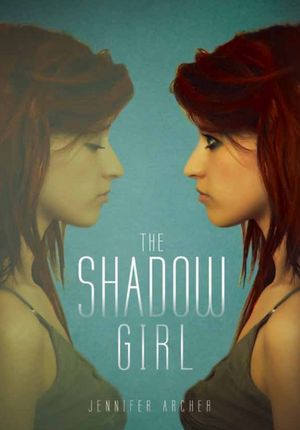
The Shadow Girl


     While cupcakes are delicious, these days with cupcake shops on every corner and gourmet cupcakes are almost more common than simple ones, I can't help but feel they are over done.
     Recently, I read The Shadow Girl by Jennifer Archer and I have to say, I was just like one of those gourmet cupcakes. The inside cover was very interesting, like a beautiful frosting maybe even a promising ganache, but like most cupcakes it just wasn't what it promised.
     The Shadow Girl is about a seventeen year old named Lily. Her father's death unveils secrets about her and the mysterious 'shadow girl' named Ivy who only she can hear.  She investigates her family’s past with the help of the boy next door and the hot new guy in town. Although some of the ideas are outside what most YA Lit is doing right now, there are a lot of classic side plots, that are a bit over used. I think people who liked The Adoration of Jenna Fox by Mary E Pearson might like The Shadow Girl. 
     I would give this book a 2.

Monday, January 9, 2012

'Stork' by Wendy Delsol


Firstly, I must mention that normally, I'd never read, not even mentioning picking up, a book like this. If I hadn't gotten it for free (thank you), I don't think I'd ever read it. In terms of manga, it's unarguably shoujo. I tend to dislike those - the fantasy romances that always have a happy ending. This book was pretty interesting, but... well.

It starts with the blatant, oh I'm a new girl moving in, everyone hates me this is a dumb countryside. Blegh. She has a
cool name, though: Katla Leblanc. The mishmash of two different languages. She's trendy, bold, and attracting attention - and her head itches, badly. It turns out that she's part of a secret society named the Storks, or something like that. They deliver babies. In a magical way. And there's an old lady.

There's plenty of romance. That I kind of skipped in my brain. I can't give a summary of that.

There's a shocking secret about Katla's past, including ice, amnesia, and that cute farm boy that always is showering attention on her. Yaaaaay.

To be honest, when I saw the galley in the racks for a sequel, I was pretty shocked. I mean, it's a decent book, but it's not really series, or even trilogy material. I just... the plot isn't that good. Plus, I can think of a zillion better books for a sequel - I mean, better suited for a sequel
. Like 'The Night Circus'. Maybe 'Divergent'.

Quote time! “I was drinking in the surroundings: air so crisp you could snap it with your fingers and greens in every lush shade imaginable offset by autumnal flashes of red and yellow.” Y'know, too perfect and everything. You can just see the potential battle scene. Hey, I don't remember - maybe there is one.

Overall, this book is a 2. I guess you could read it, if you like this sort of thing. I would say (ohgod must think of a white food to fit the color scheme) this book is... a bread bun, like so:
Pretty bland, no real substance. Some people eat it right up, though, but in the end, it'sjustfiller food for the wait until the next delicious meal. (That said, I actually love those kinds of buns in the picture, so perhaps it wasn't the best example. Oh well.)

Friday, October 7, 2011

When the Stars Go Blue

By Caridad Ferrer

     Once, Soledad thought that the best thing in the world was the percussion encouraging to move faster, jump higher, reach the skies. But things change. She gets into a relationship with Jonathan, a horn player from a corps, and he invites her to dance with the group.
     First impressions were good, a not so usual fairy dancer, Soledad, but one with actual substance. But then, it got really cliche. She falls for the guy, obsesses over him, then, is faced with a problem that might bring her apart from him. And it kept going. She falls for another guy, Taz, a spanish soccer player, then has to choose between Jonathan and the hot soccer player. It goes the whole jealous boyfriend cycle as well. Then a twist almost brought it back from the dead for me, but it somewhat disturbed me. It reminded me of Pink's music video for Don't Leave Me (which I don't recommend watching). Then, guess what! It got cliche a And she even ended up with Taz in the end.
     It's like a well known meal of macaroni and cheese that you've eaten so much that you're sick of it. You're handed a plate of it at your friend's house and have to eat it in order to be polite. You start eating it and it tastes the same, except that some spices add twists to the taste, but then it gets back to the same old and you're forcing it down again. It wasn't that good to me. I give it a 2.

Monday, June 13, 2011

Girl Wonder

by Alexa Martin
     I'm going to have to lump this book together with That Girl is Different.
I'm really not interested in the sexcapades of some insecure/druggie teenage girl as she falls in with bad company.
     If that sort of thing interests you... go for it. There are some cool bits about the debate team she joins, but they were more tedium-relievers than actual plot points. I believe I laughed out loud when she does LSD and has a terrible time, but that wasn't really because the book was oh-so-witty. She smashes an expensive fish tank. I lol'd.
     I don't know where I'm going with this. Suffice it to say that the writing is terrible, whats-her-name a terrible a forgettable main character(the book isn't really about her, after all), and the plot laughable.
     I'll write some good reviews now. I promise. Good reviews for good books.
   This was a 2. It's that cheap guacamole with the cheaper tortilla chips that taste and feel like fiber.

Thursday, March 17, 2011

Compulsion by Heidi Ayarbe


Compulsion is the story of Jake Martin, a boy completely obsessed with prime numbers. He has to do the same thing every morning, and when he doesn't, he spends his whole day freaking out about it. He constantly checks the time, adding, subtracting, multiplying, and dividing the digits so he gets a prime. When he can do it, he feels calm and safe. When he can't, he gets a panic attack until the next minute comes and he can try again. It was a little strange, and more than a little annoying when he couldn't get the numbers to work, but I could. And I'm not even the one with the obsession. Another thing that was annoying was that, when it came to manipulating the numbers, he didn't seem to have any rules. He would use some digits once, and others many times. He almost always used the digits, so if the time was 6:38, he could add 6 and 3 and 8, but I found one instance (there could be more that I didn't notice) where he added a 20 instead of a two. While the concept was interesting, and I can almost understand his obsession with numbers (although I greatly prefer composites to primes, the more factors, the better), it was not much fun to read. There was something familiar about it, sitting in the back of my mind, and it suddenly popped out when Jake compared life to a merry-go-round. Ah ha! It is The Catcher in the Rye! A depressed teenage boy who believes that no one can understand him, and who doesn't care about anyone except for his little sister. Both Holden and Jake are haunted by something in their past; Holden by the death of his brother, Jake by the time his little sister broke her arm and his mom wasn't home. They both also end up getting together with a girl they hadn't seen since they were very young. By the end of both books, the boy admits that he needs help. Compulsion had the same overall feel as The Catcher in the Rye; that dreary, shadowy, stuck in someone else's awful world kind of feel.
This book deserves a 2. It was like opening a jar of pistachios, taking one out, and pulling the shell apart only to find that it's one of those empty ones.

Sunday, February 27, 2011

The Dead by Charlie Higson


This book takes place in London, and pretty much everyone 16 or older gets sick. They get a cough, a runny nose, and boils. Light bothers them and the voices in their head tell them to eat the kids. They turn into zombies (although the characters in the book make a point of calling them "sickos" because zombies are undead and the sick people aren't). The kids are left to fend for themselves in a world with no adults. Food is hard to come by, and whenever anyone goes out, they are attacked by the zombies. The book follows one group of kids, and every once in a while, the author kills one of them.
It wasn't a very good book. It was a bit too bizarre. There was one kid, Matt, who was convinced that he had seen "the Lamb of God," and whenever something happened, it was meant to be. He was really annoying. It wasn't very well written. The book never seemed to go anywhere, and nothing really developed. A new kid would come, and a different kid would die, so none of the characters had time to develop. It didn't pull me in, and I did not find it particularly enjoyable. And it had a bad ending.
It gets a 2.

Twitter Feed

Follow cchsreads on Twitter