Twitter Feed

Follow cchsreads on Twitter

Total Pageviews

Showing posts with label YA. Show all posts

Thursday, October 26, 2017

The Red Queen Series

The Red Queen Series

Red Queen (book 1), Glass Sword (book 2), King's Cage (book 3)

by Victoria Aveyard

This series is FANTASTIC! One of the tricks that many author take a long time to master is the ability to surprise the reader. In teen novels, this is especially apparent in mysteries; you can usually see whoever "did it" before the author actually has the reveal. Victoria Aveyard has managed the unlikely... and not only does she surprise the reader, she does so many times in one novel. Victoria Aveyard also begins to experiment with changing points of view later in the series, which shows the benefits of using changing POV to show different sides to a story.

I picked up the first novel in this series, Red Queen, a while ago and postponed reading it until about a week before I would be at a signing event that Victoria Aveyard was attending. My goal was to read all three of the current books before I met the author. The first book was really good. It paints a dystopian society in which the government is run by silver bloods- people with silver blood who wield special powers. These people use the red bloods- people like you and me with no special powers- are disadvantaged in society, acting as slaves to the silvers or being forced to die in war against another society. The book really starts a few chapters in when the main character, Mare, finds out that she is not exactly a red blood- she is something new altogether. So marks the turning point in the novel and in society; how can a society stand when the oppressed begin to rebel, and when all they consider to be true is discovered to be incomplete? Without giving too many spoilers, all I can really say is that this series is really good and well worth the read; especially for fans of novels like The Hunger Games by Suzanne Collins and Cinder by Marissa Meyer.

The next two novels continue from this point; what is happening to society, what does Mare do to help the reds and the silvers, will she survive, and who might betray her? The novels work their way towards either the downfall of a nation or a change in how it is run... we still don't know what will happen!

To give this series a rating (for the three books that are out so far), I have to give the series a solid 4.5. The series is really good and keeps you involved in the action, however after a certain point the reader just starts to get mad at all of the plot twists. Another point of detraction is that the books suddenly switched points of view halfway through the series. Although I understand why the author decided to start using this device to show what was happening when characters were no longer in the same place as each other, I still felt that it was sudden and kind of annoying. Other than that, you have to love dystopian books- especially those with unforeseen plot twists!

I had a really hard time deciding what kind of food I was going to relate this book to- but, with the help of another Victoria Aveyard fan, we decided that the best food metaphor would be a box of assorted truffles from a really good brand, like Godiva. Every truffle you bite into is different and you don't know what kind of filling it will have; the one box of chocolates will just keep surprising you, like how this series keeps surprising the reader. The high quality of the book would put it on par with higher- but not really high - quality chocolates, because it is really good but not quite good enough that it has all-organic ingredients and came from another country. In general, it is the kind of gift that keeps on giving and can be truly enjoyable- just like a box of chocolates.

If you want to read this book series (trust me, you do!) then you can check out the author at https://www.victoriaaveyard.com/. This series is so good that I actually ended up driving through a rainstorm just to get the third book!!!

     ~Lucy

Monday, September 11, 2017

The Dragon's Price

The Dragon's Price
by Bethany Wiggins

This book is a good choice for anyone out there who are fans of Julie Kagawa and her novels. This book starts off sounding like your typical, every-day "I don't want to be forced into marriage so I'm going to do whatever I can to save my individuality" quest-type story. The main character comes from royal blood (also a common book character trait) and has a long-standing peace treaty with another kingdom (again, as per usual). This, however, is where the similarities end. For one, this novel has DRAGONS. I love dragons (as I suspect some of you do as well). Dragons are something that has an allure to readers- if a book is about dragons, I will pick it up. If there is a dragon on the cover, I will pick it up. There is some kind of special draw to the magic of them, to their mystery and mythology. However, in The Dragon's Price, the first book in the new Transference trilogy, there is a bit of a twist. When you kill a dragon, you gain its treasure. Sure, normally this would mean gold or money. However, in this novel, "treasure" is shown to mean a whole lot more.

The Dragon's Price is a great read for fans like me of the dragon stories, but it also holds an appeal for multiple other genres of readers- romance is another biggie. If you like romance novels; doomed ones, prince/princess ones, and pretty much any other kind of romance, this is the book for you. Sorrow, the main character, goes into her unsure future trying to avoid a loveless (and disturbing) marriage arrangement. What she would least expect to do is fall in love, right? Well, gear up- this romance is one that will keep you enthralled in the characters and their story, and will keep you on your toes wondering and hoping about what will happen.


What? You say?
What will happen?
Well, I guess you'll just have to read it to find out! (Hint: the end had me surprised, slightly flabbergasted, and ready and eager for a sequel!)

If I have to give this book a traditional, "what would you rate it on a scale of 1-5" rating, I would probably give it somewhere between a 3 and a 4. The plot had DRAGONS (that is two automatic stars) and it had great twists- to the dragon mythology, to the character and her story, and to the romantic plot. However, it could use some improvement. It felt more like a trial-run for the author- like this was a test run at writing, but that she has a LOT of potential to improve. I look forwards to reading her work in the future!

This book is a lot like bread. If you eat (read) too much, it makes you feel kinda sick. On the other hand, there are so many kinds of bread that it appeals to so many people- some people like sourdough just as some people like romance. Some people like fantasies, just like some people like whole wheat. This book is like bread for that reason- it suits many people because it has many genres in it. Then, once you think that you've had so much and you've eaten all sorts of bread that it can never surprise you anymore, you discover a new type of bread that you love- and then you start eating breads all over again. This book is a lot like that- something happens that outrages you or annoys you and then makes you more invested in the story. Personally, I would say that this book is whole wheat- grainy with some rough patches that need smoothing out and with little bits of everything so that anyone can find something they like about it.

Enjoy reading, everyone! This one is a fun read, even if it is not quite a five-star novel, so give it a try! Chances are there is something you will like about it! If you are . interested in this author, you can check her out at http://bethanywiggins.com/.

    ~Lucy

Thursday, April 6, 2017

The Baby

The Baby
by Lisa Drakeford

The Baby by Lisa Drakeford is a well-written piece about a high school girl and her four friends. She did not know that she was pregnant, and has to give birth in the middle of her best friend's house party. This book gives teens a good glimpse into what their future would look like if anything were to happen to them regarding high school pregnancy. This book uses multiple voices in a shifting point of view in five different sections. The five sections are titled by the characters names to let you know which life you are going to get a peek into.
This book, while it has it's crazy baby plot, the other plots are super cute such as the pursuit for friendship, the pursuit for a partner, and, in some ways, the pursuit for truth. This book could be viewed as a health video in some ways, but compared to it, it's SO much BETTER. Depending on a video, the book is not corny or cheesy, and when it get too intense, you can put it down and pick it up later, and when you pick it up later, read at your own pace. A health video, depending on the video, is cheesy and corny and NOT well written.

If this book were a food, it would be watermelon and feta cheese. The watermelon, which is really yummy but can get everywhere really fast and then start to stick even quicker, is like the main plot with the baby being a serious issue. The feta cheese, which adds flavor to the already good watermelon, is like the mini plots because they are the toppers on the baby plot.

I really have to give this book a five out of five stars and a recommendation for the Teen's Top Ten because of its great execution of describing the teen mom life, and my information is based off of totally awkward health videos. I should mention that the ending should have deducted a fraction of a star because it left a cliffhanger, but it's all the more reason to add, even though it's not possible, another star. It also makes me want Lisa Drakeford to write another one. Oh, I looked her up online and coming up this year is a book called The Crash that I really want to read when it comes out because it looks so amazing, and I love books! If you think that you might love this book as much as I do, check her out at  https://www.chickenhousebooks.com/authors/lisa-drakeford/

             ~Libby

Saturday, April 1, 2017

Entangled and the Splintered Trilogy

Ensnared and the Splintered Trilogy
by A.G. Howard

Ensnared is the conclusion to the Splintered series, a series that is, essentially, a spinoff of Alice in Wonderland. I started following this series right after it came out, and it is honestly one of my favorite book series- ever.

Alyssa is a descendant of Alice, and is afflicted by a strange issue- she heard the plants and insects talk to her. Her mom had the same thing, and everyone thinks that she is crazy- but Alyssa finds out differently. On her journey(s), she has to fix Alice's mistakes, defeat an evil queen, and a lot more. This series is packed with adventure, romance, and an incredible plot. This book, Ensnared, is the conclusion to this series.
I, personally, was worried that this series would fall flat on the second book and the third (like so many others have done in the past). However, it surprised me by continuing to be amazing all of the way through; a very rare thing for a trilogy to do. This book was a fantastic conclusion to the trilogy. Without giving too many spoilers, I just have to say that I was scared the love interests would get messed up in the end- but A.G. Howard came up with the perfect conclusion that satisfied this worry without ruining the series for me. I was even more pleased when the romance did not take over the entire plot, because I have always been... well, not the biggest fan of romance. This series has just enough romance to add to the plot, but not too much to make the book focus on it.

This series is simply amazing- one of the best I've read in a long time. I highly suggest it to anyone who may ask (and have done so on numerous occasions). If you are interested in Wonderland, spinoffs of famous tales, romance, or just reading an amazing book, find this one! It is AMAZING!!!

If I was to relate this book to a food, it would be Altoids. "Whaattttt?" is what you are probably thinking right now... here's why Altoids are the perfect food to represent this book; in my house, Altoids are not just an after-meal breath freshener. They are a snack. We can eat a box of Altoids and enjoy it. You can never eat too many, and they taste good no matter what. You don't feel bad after you eat a ton of them either... they are like the infinity snack that you can just. keep. eating. This series is like that- you can keep reading it and never get sick of it. I give it 5 out of 5 stars.
For those of you who are like "Cool, I'm in!"or "I want to find out more about this supercool author", you can check her out at http://www.aghoward.com/
If you are someone who is interested in the idea of reading a spinoff of a classic tale, A.G. Howard also recently released a spinoff of The Phantom of the Opera, so if that peaks your interest more than Wonderland, check it out! You can find information on this book, called Roseblood, at the website cited above.

I contributed towards another blog post in 2014 about trilogies that do not get worse in the middle and actually deliver to the reader (I used this trilogy as an example). If you want to read more about this, you can find the post at http://www.yalsa.ala.org/thehub/2014/10/27/notes-from-a-teens-top-ten-book-club-book-group-participant-series-that-deliver/#more-11408

Enjoy reading!
         -Lucy

Friday, January 13, 2017

The Valiant

The Valiant
by Lesley Livingston

Ancient Rome has always attracted a lot of interest from historians and nonfiction writers, because it holds a lot of fame for its government and, most importantly, its Games. Chariot races, gladiator fights, animal fights, animal hunts, and even water games and fights were all stages in arenas like the colosseum for the Roman people to enjoy. Nowadays, people look back on this and can't even think what it would be like- to see people fighting to the death right in front of you. But in The Valiant, a novel by Lesley Livingston, you get not a view of what the games might have been like to witness, but what it might have been like to have fought in them- with a twist. Even though this book, unlike the majority of its predecessors, is fictional, it still contains the context and detail of Ancient Rome,although from the point of not a male gladiator (as it was historically), but a female one. In this novel, Fallon, the daughter of a Celtic king, is part of a society that resists Roman rule- at great personal costs. This means that people in their kingdom learn to be fighters- and Fallon is one of those fighters. On the eve of her seventeenth birthday, she hopes to gain status as a warrior in her father's royal war band. On this same eve, a chain of surprising, and somewhat unfortunate, events ensue that carries her all the way to Rome- but not in the stands, where the Roman people all get to enjoy the games. Instead, she is introduced to the life of a gladiator- in which you kill, or die.
A thrilling adventure that enamors the audience with its fantastical plot, while including a fair number of historical details such as Caesar and Cleopatra, the types of gladiator, the tribune of the plebs, and the grammatical structure of diminutives in latin, this novel is completely enjoyable as well as one that completely absorbs the reader.

If this book was a meal, I think that it would be lentils with coriander. This dish is an enjoyable, consciously healthy dish- and the book is fiction, yet with some historical facts- it contains enough fantasy to spark your imagination while still giving you some historical background (just like healthy food tasting good). A classic Roman dish, lentils with coriander uses lentils (one of the foods commonly used in Ancient Rome) as well as many spices acquired in that region of the world at the time. Lentils represent the book because lentils were one of the Roman staples of food. They were used commonly in many recipes, and hold a fair amount of nutritional value that helped a lot of people to stay healthy. This book captures the essence of the gladiator games, which was another essence of the Roman times- they used the games for happiness. The spices used in this dish are representative of all of the historical tidbits thrown into this novel- the latin grammar of the diminutives, latin vocabulary for gladiator kinds, etc. These facts added a little spice to the gladiator games and the book, just like these spices add to the taste of lentils, which-like the gladiator games-are a Roman staple.
This is a really good book, but I still would have enjoyed a little more Ancient Roman and Latin input. I give it 4.5 stars out of 5.

If you are interested in this book or want to see more by Lesley Livingston, you can check out her website at http://www.lesleylivingston.com/.

                           -Lucy

Wednesday, January 14, 2015

Shutter

By Courtney Alameda

Micheline Helsing is a tetrachromat, she can see ghosts, and she uses her abilities to hunt ghosts with her friends Oliver, Jude, and Ryder. Micheline is the only heir to the Helsing corporation, a business that goes after the different kinds of ghosts and hunts them down before they can kill anyone. When a ghost hunt goes wrong, Micheline and her friends are infected with a soulchain, a ghostly disease that is slowly killing them from the inside. Now Micheline has to go against her father's wishes in order to save herself and her friends before they all die.

The way this book was written was not what I expected. There was a lot of detail and description and while it did show instead of tell the amount of descriptive words really threw me off of the actual plot that was going on. For instance: "I followed Damian out into the anemic, waning night. Spindly trees lined the wide avenue, shedding the gangrenous leaves of fall." (p 62). Read that sentence. Then read it again. Can someone please explain what that actually means? "anemic, waning night." Is it sick? Most of the book was written as if the author had written it, then edited it while going through a thesaurus and changing words to any synonyms she could find.

Another thing that bothered me about this book was the fact that Micheline's father, Leonard, was abusive. He hit her only once during the story, but it is showed that it was not the first time he had hit her. He also destroyed all of her cameras after a failed ghost hunt, locking her up in the bathroom while doing so. He then proceeded to get drunk and passed out, leaving her locked in the bathroom. While I understand that having an abusive parent can act as a plot point, the way it was written made it seem ok that her father hit her. Micheline managed to sneak out of her house and brushed off the incident as if it was nothing, and at the end of the book, she and her father make up as if nothing happened. While I can understand that having an abusive father is part of her character, I do not understand how the author has the two just make up and be all lovey-dovey at the end. Micheline would not have made it up to her father just like that with no second thoughts, he had abused her! And in the end they just go about like it was nothing.

The fact that Courtney Alameda made up her own mythology for this book was impressive and confusing. Every time there's something new coming in Micheline has to explain it and the amount of names for things and different kinds of hunters got me very confused. It was very impressive that she managed to create basically an entire mythology and incorporate it into a book.
The overall concept of the book was good, it was a good plot idea and there were many sections, especially dialogue-heavy sections, that were good. Some serious editing could really help this book and improve it by a hundred times.

I liked the fact that Alameda did not make a love triangle. With Micheline and Ryder having forbidden love and Jude being the one Micheline was supposed to marry there could have easily been a love triangle, but she did not put that in the book and I am grateful, too many YA novels have love triangles.
However, the other characters could have been more fleshed out. Ryder, Jude, and Oliver are her friends, but we never get an explanation for why they are friends, they don't seem to have much in common other than hunting ghosts. Oliver in particular is a very flat character, his entire character revolves around being the smart one that stays out of fights because he's hurt and everything. Jude is the stereotypical tough guy who can't show his feelings so he sleeps with a bunch of girls instead. And Ryder is the run-of-the-mill forbidden love interest, really strong and manly, the one Micheline really connects with and has feelings for, but she can never have him because she is destined to marry Jude instead. Do you see where I'm going with this? It's a pretty stereotypical friend group, the geek, the brooding one, the jock, and the quirky but lovable girl. It's like the Breakfast Club except the Princess and the Basket Case are melded into one character.

I think this book is like a slightly stale piece of plain bread with some raisins in it. It's not all that new of a concept and some of the tropes are overused, but there are some good aspects to it as well. I would rate it a 2.25.

Friday, January 9, 2015

Hit

By Delilah s. Dawson

Patsy is an indentured servant of the United States government, which has turned into the Valor National government. Valor National was a bank that got the United States out of debt by adding a clause in a credit card application which allows them to demand all the money owed on the spot, have them be killed, or have them be turned into a hit man. Patsy's mother had taken out a huge loan and now Patsy has to either kill ten people in five days or her mother dies.

This book had a good idea, but the way it was executed was a little boring. The entire book focused on Patsy and Wyatt, the son a man she just killed, riding around in a van and killing people. Their relationship was very implausible, considering Patsy killed her father and they met when he was about to get revenge by killing her, and a chapter later they were making out. Overall their relationship was not very fleshed out, and the pretense the book was set in was a little implausible. On one hand, what is the chance that a bank can manage to set up a dictatorship that allows them to take people as assassins, and on the other hand the entire plot hinges on no one saying anything. I find it very hard to believe that people would be dying and getting shot and no one connects the dots and makes a conspiracy theory. Another thing I had a problem with was that there was supposedly a rival bank that was competing with Valor National and both were using the same tactics to get people to kill others, the rival bank was mentioned two or three times in the book, and I get that it's a series and the confusion might be to have the reader want to read the next book but honestly it confused me more than made me interested. One thing I really liked about the book was the dog, Matty, and the dog never dies so I'm very happy about that.

Overall I thought the book was ok, it had a good idea but certain parts took away from it. This book was like bread with butter and a little bit of cinnamon sugar. Good, but not so special that it could be its own meal and similar to other books. I'd give it a 3.25

Thursday, September 25, 2014

Bloodwitch

by Amelia Atwater-Rhodes


     Vance is a quetzal shapeshifter who lives with the vampires of Midnight in the 19th century.  He has had everything he could want, but when a man visits the vampires and speaks with Vance, his dreamlike life starts to crack as Vance begins to question the actions of his beloved guardians and rulers of Midnight.
     Vance has good conflicts, and even when he starts doubting, the vampires don’t change their characters.  The consistency is nice because it makes it harder for Vance and easier for the reader to understand him.  I did not like Vance as a character, though, and I felt that a lot of his thoughts and doubts were forced.  He would arrive at a state of mind suddenly and then sit there for a while instead of gradually coming to realizations, and, given what happened to him throughout the book, I’m not sure Vance really would have gotten to where he ended up mentally at the end.
     The world it is set in is well developed with indications of other countries and the depth of an entire world, not just the city it takes place in.  The relations between the different types of shapeshifters are interesting, as are the different talents they all have.  The characters represented different types of thought to make Vance think about what was best and what needed to be fixed.
     This is a 4.2.  There was a good plot, solid writing, and I liked all the characters except for Vance.  It is a soft, dense cookie, with nothing in it to interrupt the texture.  Things happened as expected without much surprise.  It is not large, but it is filling and afterwards, you feel satisfied with what you’ve eaten.

Thursday, September 18, 2014

Curses and Smoke

by Vicky Alvear Shecter


   Set in Pompeii just before the eruption of Mt. Vesuvius, Lucia is about to be married off to a much older man so her father can get money for his gladiator school.  Just weeks before the impending marriage, however, Tag, one of her father’s slaves, returns from Rome where he had been studying medicine so he could heal hurt gladiators, and an old friendship rekindles between them.  The relationship blossoms into something more, but both Lucia and Tag know it wouldn’t be able to cross their class difference even if Lucia weren’t already engaged to someone else.
     I liked the story and found that I was engaged in the characters and the story and wanted to know what would happen even without the element of Mt. Vesuvius adding the sense of impending doom.  Although I’m not an expert in Ancient Rome, from what I’ve read of other reviews, the book is historically accurate and should appeal to those interested in historical fiction.
     Tag was a good counter viewpoint to Lucia.  Lucia was somewhat ignorant and probably would have come off as whiney if the reader were not also given the other side of the story to balance it out.  Tag could point out her mistaken assumptions and he broke many of her beliefs about her father that were fairly clear to the reader as wrong.
     This is a 3.8.  I liked the story right up until the end.  I won’t give details because it’s the end, but I felt cheated and it wasn’t what I wanted at all.  But the writing and story were good and the setting was made well.  It is whipped cream.  It’s tastes good as you’re eating it, but when you’re done, it has dissolved away without leaving much

Friday, September 12, 2014

The Twyning

by Terence Blacker


     Efren is a rat living in the rat kingdom in the sewers.  When the king dies and new leaders are selected, they decide that humans are a bigger threat than they had previously believed and they decide to wage war.  Meanwhile, a human doctor who has been studying the rats decides that they are one of the biggest threats to humans, and he rallies the people of the city to attack the rats.  Then Efren and some human children meet, and both types of animals have to decide which side deserves their victory.
     Efren was a likable character.  He noticed that he had differences, but he accepted them and still tried to serve his kingdom as best he could.  The children, Dogboy and Caz, both have interesting back stories and conflicts that they have to deal with.  Out of all the characters, only Efren, Dogboy, Caz, and two others really try to understand anything about the other species.  This helps flesh them out, but the whole war between rats and humans seemed blown a little out of proportion.  If you accepted it as it was though, it was a pretty good story.
     The pacing was often off for me.  There were a lot of parts that should have taken a while but passed by fairly quickly and parts that should have gone faster that took a long time.  The individual scenes were alright; it was the overall passage of time that wasn’t quite right.
     This is a 3.2.  I liked the rats and their kingdom and the two children.  I didn’t like most of the other characters and parts of it dragged, but I did like the story as a whole.  It is like store-bought chicken pot pie.  It’s not store-bought because it feels generic but because it didn’t have the warm, savory, homey feel about it.  There are some things in the pie that you like and some that you don’t, but mixed up all together, it’s still pretty good.

Thursday, September 4, 2014

Whisper

by Chris Stuyk-Bonn

     Whisper has lived in the woods ever since she was abandoned as an infant because of a disfigured mouth.  In her society, disfigurations are frowned upon, so she instead lives with a few others who were also abandoned and taken in by a man named Nathaniel.  The beginning is very expository because Whisper doesn’t talk much, and when she does, she whispers - hence her name - and the book takes a while for the book to get going.

     After Whisper is taken away by the father who abandoned her then moved again to the city and forced to work to give her father money, the story picks up.  Whisper meets other characters who also have disfigurations and learns how to live with her own and use the talents she has to make a living.  I enjoyed the middle when Whisper was growing as a character and learning new things and the story was developing.  However, partway through, a doctor offered to fix Whisper’s disfiguration, and while this was probably supposed to make Whisper struggle with her identity and how much her disfiguration felt a part of her, I felt as though it undermined the premise.  Their society was advanced enough to be able to identify her disfiguration - a cleft palate - and the doctor has fixed many of them before, but they still treat those with any sort of disfiguration as evil and abandon their infants in the woods.  When the book started, I thought that there was almost no technology and they all believed in magic, but that’s not the case.  They call Whisper a devil, but that’s the only time anyone seems to believe that there’s anything supernatural in the world.
     This is a 2.7.  The writing sometimes got really wordy and I didn’t like the world it was set in.  The world could have been fleshed out some more, but I did like the middle and the development that happened there.  This is like a cream puff with really good cream inside but with the outer dough somewhat lacking.

Thursday, August 28, 2014

Unforgotten

by Jessica Brody

     This is the second book in the Unremembered trilogy, although I have not read the first one.  I still felt like I knew what was going on, though, and Unforgotten stands pretty well on its own.  It started out strongly, with Seraphina and Zen living in 1609.  Due to a technological advancement in the nearish future, both Seraphina and Zen have a gene that allows them to travel through time.  Seraphina was created by a company called Diotech, so she has enhanced physical abilities.  In the previous book, she had escaped from Diotech, and they now desperately want her back, so she is careful not leave any trace of her identity that Diotech would be able to use to find her.
     The time travel aspect was done well, although I wish some parts of it had been explored a little more.  I also liked the main plot.  It was engaging, interesting, and gave you enough information without giving too much away.  The climax and resolve, however, were really unsatisfying.  It took away from a lot of the rest of the book and I felt cheated at the end.
    This is a 2.2.  The overall writing style is good, and Seraphina and Zen were likable enough, but it was like eating a good sandwich and most of the way through discovering that there’s a worm poking out (the book was not bad enough for you to have bitten the worm - just see it).  The whole experience is ruined because of that little worm, and the worm signifies the end of the experience.

Thursday, August 21, 2014

Just Myrto

by Laurie Gray


     Myrto is the second wife of Socrates.  Historians disagree on whether or not Myrto existed because Plato never mentioned her, although others from that time period did, but this book assumes she did.  Myrto has no dowry, so she is married to Socrates, who takes her gladly.  At first, Myrto is hesitant about the relationship.  Socrates is much older than her, and his first wife, Xanthippe, is quick to anger and terrifies Myrto.  In order to avoid Xanthippe, Myrto goes into town everyday with Socrates and learns with his pupils.  Through these lessons, Myrto’s relationship with Socrates and his son grows.
     This was a peaceful book.  Nothing much happened as Myrto discovered herself and found her place in the world.  The way she questioned everything did begin to grate on me, but I think that style of thinking was part of the point of the book.  The writing was clear, but the characters were a bit undeveloped.
     This is a 2.8.  Not a fantastic book, but not terrible.  It’s good for people who like historical fiction and simple pondering.  It manages to skim over the repetitive days at a good pace and introduce some of the lifestyle of Ancient Greece.  It’s like a cracker.  It’s a little dry, but pretty good.  Kind of plain, but still enjoyable, and there are people who really like crackers and would really enjoy this book.

Tuesday, August 12, 2014

Cold Calls

By: Charles Benoit

Three teenagers get mysterious phone calls.  There is no phone number and no trace of the call.  The call requires that each Eric, Shelly, and Fatima bully a specific person in a specific way on a specific day.  They are all supposed to call each victim names, bump into them in the hallway, and finish it off by pouring mac and cheese onto the victim's head, video it, and post it on Youtube.  If Eric, Shelly, and Fatima don't do what the caller demands then the caller will reveal a big secret about each one of them to everyone they know.  At first, these high schoolers don't know each other, but they meet when they are all sent to the same bullying program.  For the remainder of the book Eric, Shelly, and Fatima work together to find out who the mysterious caller is and how to get the caller to stop.

I was surprised by this book.  To me, the plot seemed sort of dumb.  Why would I want to read a book about some teenagers that are getting blackmailed into bullying someone?  It really did not sound interesting.  That being said, that isn't exactly what the book is about.  Most of the book focuses on Eric, Shelly, and Fatima figuring out how to catch the caller and the backstory of each character.  I was also surprised by the depth of the characters.  They were surprisingly realistic.  The motives were also very fitting for each character.  The motives seemed to build the character, not just take from it.  Overall, this book was pretty good.  It did lack some excitement and was slow from time to time, but other than that, the book was interesting.  The one thing I found the book lacked was a realistic antagonist.  The motive behind the "cold calls" was underwhelming.  The ending of the book also seemed a little clipped and unclear.  However, what I found to be unclear I don't think was intentionally ambiguous.  I just thought the writing confusing at the end.  This book was like broccoli -- pretty tasty but could have been better.  It had a good flavor but not one I would call excellent.   This book was a 2.25

Monday, August 11, 2014

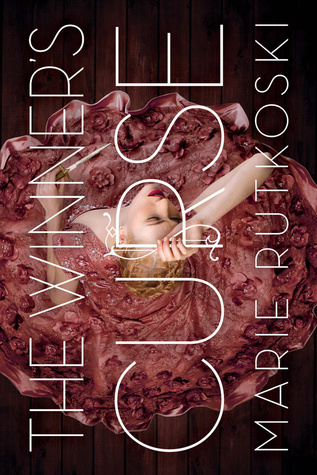
The Winner's Curse

Written by: Marie Rutkoski

This book is like a tootsie roll lolly pop. You have to get through the boring outside before the delicious center, but the wait is definitely worth it.

Fair haired Valorian Kestrel is the daughter of a famous general who’s expectation of her is to join the military or marry. Kestrel is not encouraged to play her beloved piano, so when she accidentally overhears the auctioning of a Herrani slave who is a fellow musician, she uncharacteristically buys him from the market. She soon finds that he is a proud and unbeaten man, and she asks him for his complete honesty in all things. Kestrel learns from Arin many things about herself and his past, and she realizes that the conquered Herrani are not the helpless people she may have thought them to be. From their conversations, Kestrel begins to see the true nature of her society, her family, and of course, herself.

To be completely honest, the minute I opened this book I was ready to write a completely sub-par review. Oh no, I thought, another book about a badass princess. By chapter two, I was prepared for the general mediocrity that would be sure to come.

If I have ever pitched a book to a potential reader with the promise that it would “pick up near the end,” this is the book I was talking about. The beginning was typical and uninteresting. The second half though, is fast paced and absorbing. The plot is not boring at all, and it constantly is developing and moving into new territory. The characters don’t sit there mulling over one little snag the entire time. So that was good. I stress again, just get to the second half.

But what is really the best aspect of this book is the romance. Yay for romance lovers like me! In my opinion, the relationship between Kestrel and Arin is captivating. They are from two different worlds, and they are separated by their race and class. Neither wants to be in the position they are in, but both realize that they just have to suck it up and figure out a way to make it work. Kestrel is trapped under the expectant gaze of her military father, and Arin is a slave cast from his previously noble position. But don’t worry, this isn’t another princess-falls-in-love-with-the-stable-hand kind of novel. I think we’ve all had enough of those. This is a story about two people who are equal in every respect, except in the way that society perceives them.

The book also explores the nature of love of country; how loyalty to one’s people and heritage may not always be what is right.

Okay, yes, there is a certain amount of cheese, and yes, the names of some of the characters are less than creative. And yes, there is of course the obligatory dress scene, where the protagonist in question describes the every detail of her debut gown. Basically, if you are unwilling to read through the tea parties and debutante balls then this book is not for you. But what I think matters most in judging a book, is how you feel when you turn the last page (warning! It’s a cliffhanger!). What I was feeling when I finally reached the end, was that I wished I had the second book next to me so I could start reading immediately!

All in all, I would steer you away from this novel if you aren’t into the whole royalty and dresses thing. And if you had any doubts about the genre, it is one hundred percent a romance. If you hate romances, don’t even bother. If however, you are okay with a little cheese now and then and love this kind of novel, then I absolutely recommend it.

4/5 stars!

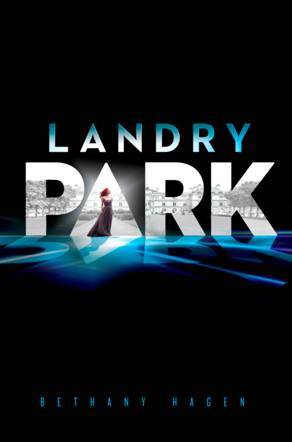
Landry Park

Written by: Bethany Hagen 

This book is similar to a packet of oyster crackers: tasty but not quite the same as the whole clam chowder.

Set in futuristic America, this novel follows Madeline Landry; she is the heir to her family's vast fortune but she's not so sure she wants it yet. America is controlled by the gentry, and the people are broken up into classes. First, there is the Uprisen, a select group of wealthy gentry who control basically the entire country. The heirs are expected to marry early and produce children quickly; this task falls to Madeline, and she is reluctant until she meets the very suitable and handsome David Dana. The second class of citizens is the middle class, people allowed to work in trades and service to the gentry and upper class. Finally, there is the lowest of the low, the Rootless, who handle the radioactive materials that provide the gentry with their endless wealth and power. The Rootless are sick and poor, and they are constantly dying as a result of the massive amounts of radioactivity they receive each day. The gentry, however, give little thought to these dying people other than to ridicule and look down upon their insignificant existences. But when Cara Westoff, Madeline's childhood tormentor, says that she is attacked by the Rootless, Madeline doesn't immediately believe her, and she feels she must sort out the truth. She travels to the Rootless community with David Dana, where she witnesses countless injustices. Her view of her previously idyllic home is completely changed, and she must decide how to handle her newly found awareness of her society. She must ultimately choose between justice and comfort.

This novel is a pretty good read. The plot is interesting and the story is fairly original. If you like princess-y type books and futuristic novels, this book is certainly a blend of the two genres. There are several plot lines to consider while reading, which is always more interesting than just one, so that is certainly a plus. In general, the book was good.

There are a few qualms I had that I might point out for consideration, however. Generally, the characters are of the slow variety; they do not catch on to simple plot points until long after the reader has. Along the same lines, they do not address their seemingly most relevant and intriguing problems first, instead they ignore them until there is no avoiding them. This is frustrating, as the reader obviously doesn't want to wait while the protagonist floats around, unaware or uninterested in their most pressing problems. Finally, and most importantly, the book was a little boring in some parts. I was never seized with the urge stop everything and read until I was finished. It was in some places a little drab.

The book in the end was not bad though, just a little slow. I would consider it for a quick read if you have the time. By the final couple chapters, it was definitely more interesting, and the pace did pick up.

3/5 stars!


Under Shifting Glass

By: Nicky Singer

This book was like one scoop of vanilla ice cream.  It was simple, smooth, cold, and delicious.  The coolness of the ice cream penetrates more than the simple flavor which only adds to the experience.

Under Shifting Glass was about Jess.  Her mother is having babies that are conjoined, a word Jess prefers to Siamese twins.  However, the father is Jess's step father Si.  At about the same time her mother has these babies her Great Aunt Edie dies.  On top of that, Jess also feels like she is losing her best friend Zoe.  Jess always played piano at Aunt Edie's house and her grand piano is really the only thing that Jess want's of Edie's.  However, Jess receives a bureau instead.  In the bureau she finds a flask with something that creates light, a beautiful, natural, iridescent, breathing light that only Jess sees.  Jess is haunted by the statistics the Si gives her about the number of twins that die when they are being separated.  Jess starts seeing parallels all over her life.  The dying of her relationship with Zoe to the possibility of one of the twins dying is the most relevant in the book.  Jess feels that somehow she is connected to the twins and their survival depends on her acting with love and grace rather than the hatred and jealously she can't help but feel.

This book was very focused.  It didn't talk about much other than what Jess was thinking in just the small amount of time the book took place in.  However, this wasn't really a problem.  The book felt complete.  Jess's character was extremely thoughtful and she made the book meaningful.  One of my only problems with the book was figuring out how old Jess was supposed to be.  She could easily have been 6 or 7 or she could have easily been 14 or 15.  Her relationship with Zoe and other schoolmates made her seem young yet her family treated her like she was older.  However, that was really the only problem with the book.  Each word in the books has a meaning and purpose.  There isn't any superfluous description or meaningless characters.  This was refreshing because it made the book simple yet sincere.  This book is a 4.

Thursday, August 7, 2014

There Will Be Bears

by Ryan Gebhart


   Tyson is thirteen, and he is going through something of a social crisis when the book starts.  His best friend, Bright, is gravitating towards a new group, and Tyson is struggling in several of his classes.  Instead, he spends time with his grandfather, who has promised to take him hunting, and Tyson can’t wait.
     Tyson loves bears.  A lot.  It’s almost all he thinks about and most of what he talks about, which got pretty tiresome.  There was basically nothing else to Tyson’s character except his crush on a girl from Texas, who also happens to really like hunting.  Tyson barely tells her a single true thing in all of his conversation with her.  His desire to go hunting led him down a questionable decision making path.  When his parents decided he couldn’t go hunting with his grandfather because his grandfather was sick and needed special care most days, he decided to sneak his grandfather out of the nursing home and out into the wilderness to shoot an elk.  Oh, and there’s a loose grizzly bear wandering around the one area they decide to go to that has been eating people.  But they had to go to that spot to shoot an elk.
     Most of the characters didn’t have a sense of characters.  They existed in an abstract way and did stuff, but they each had one personality trait if they were lucky.  The writing was straightforward and to the point, which normally doesn’t bother me, but it seemed really blunt here.  There was also slang, which just about always bothers me.  I don’t want to read about what people ain’t going to do, and nobody calls a grizzly bear a grizz (although I guess I shouldn’t say nobody - clearly Tyson does).  The tone of the book is similar to that of the cover.
     This is a 1.4.  It did amuse me quite a bit, just because of some of the ridiculous things that got written.  Other than that, the best thing about it was that it was short and I knew the end was coming.  If it was longer, I probably wouldn’t have finished it.  This is like eating the leaves of a carrot.  It’s something probably best left uneaten, doesn’t taste very good, but once you’ve taken a bite, it’s not so disgusting that it necessitates being spit out.  It might be a good book if you think the cover is really great, or if you also really like bears and hunting.

Thursday, July 31, 2014

The Ring and the Crown

Written by: Melissa de la Cruz

This novel seems to me similar to a weak cup of unsweetened tea.

The Ring and the Crown follows the lives of several girls in the age of ball gowns and the London season. All have different tales of love and loss, but they all end up entwined in some small way. Each is a prisoner of duty, and each wishes to be rid of the bonds of responsibility to their families.

There are several different characters in this book, and I think the teaser on Amazon gives a good summary, so I won't try to imitate it. The link to the teaser is here.

De La Cruz's intended message of the book was clearly to show how strong women are, especially in the past when they were expected to do what is right by their families at all times. Women were married off for strategic or monetary reasons, and they were seen always as the weaker sex. Their misfortunes and bleak futures were demonstrated well in the novel. Unfortunately, the actual main characters, the women, did not live up to De La Cruz's intended message.

I did not particularly like this book, in fact I found it a bit boring. The stories of the women were not particularly riveting, and the secondary characters were mostly flat and one-sided. The women themselves did not seem strong to me. They seemed in some cases weak, but mostly just silly. I did not think that they acted with very much self respect on the whole, and that instead of emphasizing their right to freedom, they acted rashly and with petulance. They did not strike me as level-headed, diplomatic strategists, instead I was under the impression that they needed to grow up.

The women weren't all off the mark however, in fact there was one character that I did like. The Princess Marie-Victoria was the strongest woman in the book, and she did show a level of diplomacy and resilience in the face of injustice. She was certainly a redeeming character in an otherwise weak crowd of simpering females.

I suppose in the end, De La Cruz did make the point that women have to make many sacrifices and bear many hardships. I understood this well from the book, but it did not ultimately impress me. The women were largely shallow and concerned only with their appearance (except for the Princess). It is never enjoyable to read a book where most of the characters live up to their bad stereotypes.

If you really, really, enjoy princess-y type books, then go ahead and read the book. It is not a bad novel,  I just did not find it particularly impressive.

I do really like the cover art.

2/5 stars. 

Mistwalker

Written by: Saundra Mitchell

What else but lobster could you possibly eat while reading this fishy tale?

Willa Dixon is a relatively normal girl. Yes, she is destined to become a Lobster fisher, and yes, she has to work extra hard to balance the dwindling finances for her family, but besides that, she has a boyfriend, a job, and a regular best friend. Her life is tough, but not too unusual. That is, until one night her brother is murdered while Willa watches. The next year is a whirlwind of court cases, accusations, and sacrifices, as Willa is an integral part in putting the killer behind bars. She has to decide between her beloved fishing and her brother's memory, while trying to communicate with her angry father. She has pretty much got her hands full. And then, for some reason she keeps thinking about the abandoned light house near her town, despite the fact that nobody else spares the building a second thought, aside from passing around stories about the Grey Man, the resident spirit in the lighthouse. So when one day a mysterious boat bumps up against the shore right where Willa is sitting, she decides to get in. It takes her right to the lighthouse, where she discovers that the Grey Man might actually be real.

Phew! Okay, so as you can see, there's a lot going on. I liked this book, aside from one thing (which I will get to in a minute). Willa's non-supernatural life was fun to read about. The setting was interesting and unique, and I think Mitchell captured the ambiance of a slightly run-down fishing town very well. I definitely could see how Willa loved her little town and all the people in it. Thankfully, she was not an overly dramatic heroine, as so many are, and Willa was very much like a real girl, which was refreshing. 

The book is written half from Willa's perspective, and half from the Grey Man's, and I thought there voices were each unique and interesting. The Grey Man was slightly more poetic, and balanced well in his narrative was a mixture of desperation and fear for his future. Both voices were compelling. 

There was unfortunately a rather large flaw in the book. Everything up to the climax was engaging and entertaining, and then it just flopped. The final scenes were pretty much out of the blue and not believable enough. Suffice to say, the climax was not lead up to very well. This would not have been such a big problem if the climax itself had been good. But, it wasn't. Like all protagonists, Willa needed to save herself in the end. This was managed only through a ridiculous amount of luck and happenstance. The reader is given zero hints about a loophole in Willa's fate (this sounds a little confusing but there is no other way to describe it without giving away the book) and so I was completely surprised (and not in a good way) about the ending. It was as if the book wasn't fully planned out, so when the ending needed to be written, some unrelated idea was pulled out of a hat and stuck in the last chapter. 

All in all, this book was not bad, and until the ending it was fairly good. But, like all books, the ending is what the reader remembers most, and in this case I wasn't blown away. 

2.5/5 stars

Twitter Feed

Follow cchsreads on Twitter